AI
ChatGPT 4 and its new capabilities
Today, I would like to share about ChatGPT 4 and its new capabilities. Let’s take a look.
GPT-4 or Chat GPT-4 is a large multi-modal model that combines artificial intelligence and natural language processing (NLP) to provide natural language answers to various queries, alongside other functionalities such as code writing, text translation, proofreading, article writing, and spreadsheet creation.
According to OpenAI, ChatGPT 4 exhibits capabilities that closely resemble human performance in numerous professional and academic benchmark tests, though it may fall short in certain real-world scenarios. Compared to its predecessor, GPT-3.5, ChatGPT 4 boasts enhanced speed, self-sufficiency, creativity, and stability.
Usage
Currently, ChatGPT 4 is exclusively available to subscribers of the paid ChatGPT Plus plan, while the free version continues to be based on GPT-3.5. Furthermore, developers can access GPT-4 through an API, allowing them to create applications and services utilizing this advanced language model.
For ChatGPT Plus subscribers, the process of using GPT-4 remains identical to GPT-3.5. Users can simply state their requirements and await the algorithm’s response, which now benefits from the improvements of GPT-4.
New Capabilities
OpenAI highlights three key areas where GPT-4 surpasses its predecessors. First, it demonstrates superior creativity, excelling in collaborative creative projects, including music composition, scripting, technical writing, and adapting to a user’s writing style. Secondly, GPT-4 exhibits a wider contextual range by processing up to 25,000 words of text from a user. Additionally, users can provide a web page link, enabling GPT-4 to interact with the content on that page, streamlining content creation and fostering lengthy conversations.
Lastly, a major innovation in GPT-4 is its ability to process visual input. Apart from textual queries, users can now present questions or requests by sending images, expanding the model’s utility and versatility.
Conclusion
OpenAI emphasizes that GPT-4 places a strong emphasis on safety. Internal testing reveals that GPT-4 produces 40% more objective responses and is 82% less likely to respond to inappropriate content requests. OpenAI collaborated with over 50 experts to gather initial feedback on AI safety and security, ensuring a safer user experience.
This is all for now. Hope you enjoy that.
By Asahi

kishimoto at 2023年08月08日 10:00:00
GitHub Copilot can now show suggestions for match code in a public repository
GitHub has released a private beta version of the GitHub Copilot code browsing feature to give developers this option. When code referencing is enabled, Copilot will not automatically block the matching code it generates, but instead will show it to the developer in the sidebar and let the developer decide what to do with it. Over time, this feature will also be implemented in the Copilot chat.
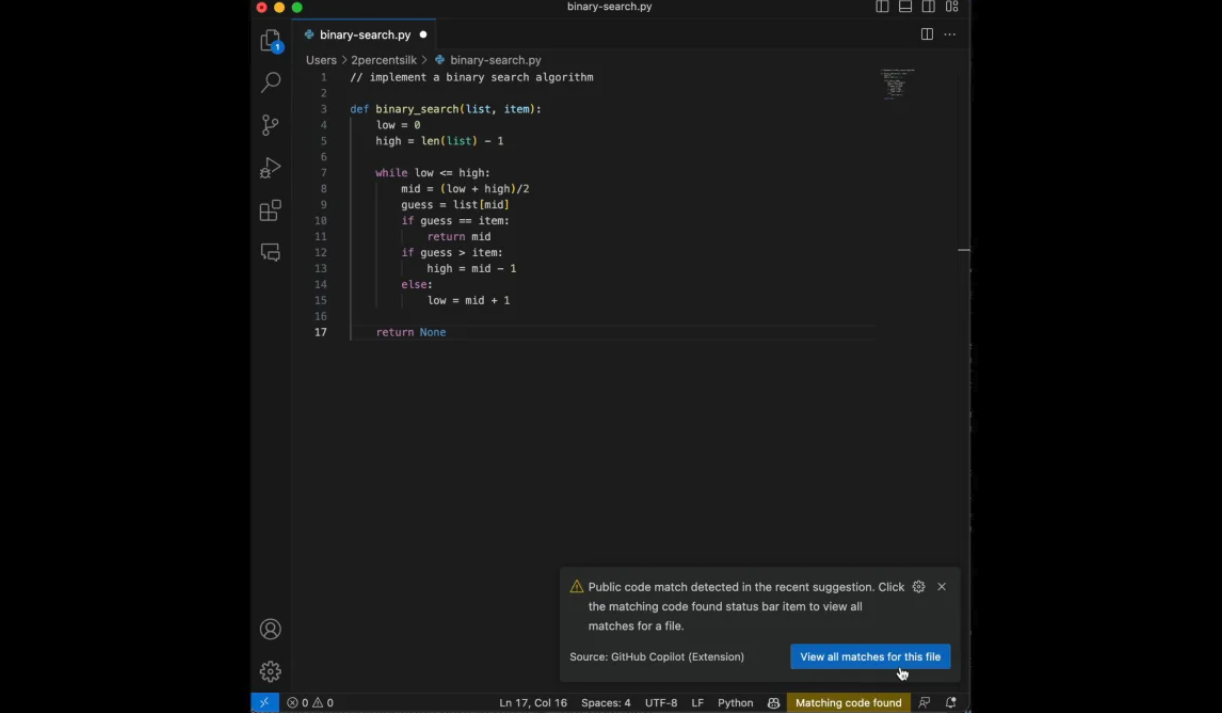
GitHub previewed this feature last November, but it has clearly taken a long time to release.
GitHub CEO Thomas Dohmke told that Microsoft, GitHub, and most of his Copilot enterprise customers used the original locking feature, which he also said was a bit of a dull tool. said. “It gives you little control to decide for yourself whether you actually want to take that code and attribute it back to an open source license. It doesn’t actually let you discover that there might be a library that you could use instead of synthesizing code,” he told me. “It prevents you from exploring these libraries and submitting pull requests. You might be reproducing everything that already exists in some open source repo.”
Also, the code browsing feature tends to trigger more often when Copilot doesn’t have much context to operate. If Copilot can see a lot of context from the existing code you’re working with, it’s unlikely to generate hints that match public code. However, if you’re just starting out, your chances of generating matching code are greatly increased. You can read more detail about this topic from Github blog.
Yuuma
kishimoto at 2023年08月07日 10:00:00
- 2023年08月02日
- AI
ローカル環境でChat AIを動かせるようです
text-generation-webui というアプリケーションを使用することで
一般家庭用のPCでもグラフィックカードを使って
Chat GPTのような大規模言語AIを比較的簡単に動かせるようです。
モデルのダウンロードやAIのキャラクラー性の設定も簡単にできるようです。
使用するモデルにもよるようですが、vramは16GBほど必要なようです。
グラフィックカードは最新世代のnvidia製のvramが12GBの物と、
1世代前のamd製のvramが16GBの物を所有しているのですが、
Windowsではamd製のグラフィックボードはサポートしていないようなので、
少ないvramでも動作するモデルを見つけられたら
Windows上で試してみたいなと思っています。
水曜担当:Tanaka
tanaka at 2023年08月02日 10:00:00
- 2023年07月31日
- AI
Netflix is hiring an AI manager for up to $900K
Netflix hires a product manager to strengthen the internal use of artificial intelligence. In the first joblist discovered by the intercept, Netflix will manage to a successful applicant of $ 300,000 to $ 900,000.
In their tasks, Netflix develops a “strategic vision” for using AI through machine learning platforms, evaluates the use, execute a program for “user education” in the platform, and maintains new technology. Includes to do.
The important thing is that it is not clear whether this role is directly involved in content creation or influence. Netflix has already selected a thumbnail art that uses artificial intelligence to customize user recommendations and appeal to a specific preference of individuals. The company was parody with Netflix’s own black mirror. The streaming site will also use AI to analyze which content is successful and notify future production.
However, Netflix has previously demonstrated that it does not oppose the idea of using AI to generate content. The company was scrutinized in February after the Japanese division using AI to generate the background art of Anime Short THE DOG and THE BOY.
All of these are all invested in AI, are ready to invest a large amount of investment, and are willing to invest.
Yuuma
kishimoto at 2023年07月31日 10:00:00
- 2023年07月27日
- AI
OpenAI GPT API(10) WebAppでの活用
今回はOpenAI APIをWebアプリケーションに組み込んで活用する方法を説明します。
PythonのWebアプリケーションフレームワークといえばDjangoが有名ですが、
今回はテスト用途なので、軽量でシンプルなフレームワークである
Flaskを試してみたいと思います。
nishida at 2023年07月27日 10:00:00
 大人が楽しめるヒーリング絵本河童のカパと静かな森
 パワースポット 日本三大神滝布引の滝
 佐藤・広幸ドイツ魂
 Himeji Castle姫路城
 ボイドタイムお知らせアプリVoid Time 〜月を無視できない〜
 撮った写真をカレンダーに撮りカレ
 ライブ壁紙竹田城ライブ壁紙
 赤ちゃんにっこりBaby+Smile
 電子書籍[for iPhone]ターラのアストロロジー
 Windows+WSL2+Docker開発環境のトラブルTips集
 290B級AIをゲーミングPCでローカル実行?「FreeToken」が目指す新しいローカルAI
 WindowsのターミナルにもローカルAI―「Intelligent Terminal 0.2」